
Menu
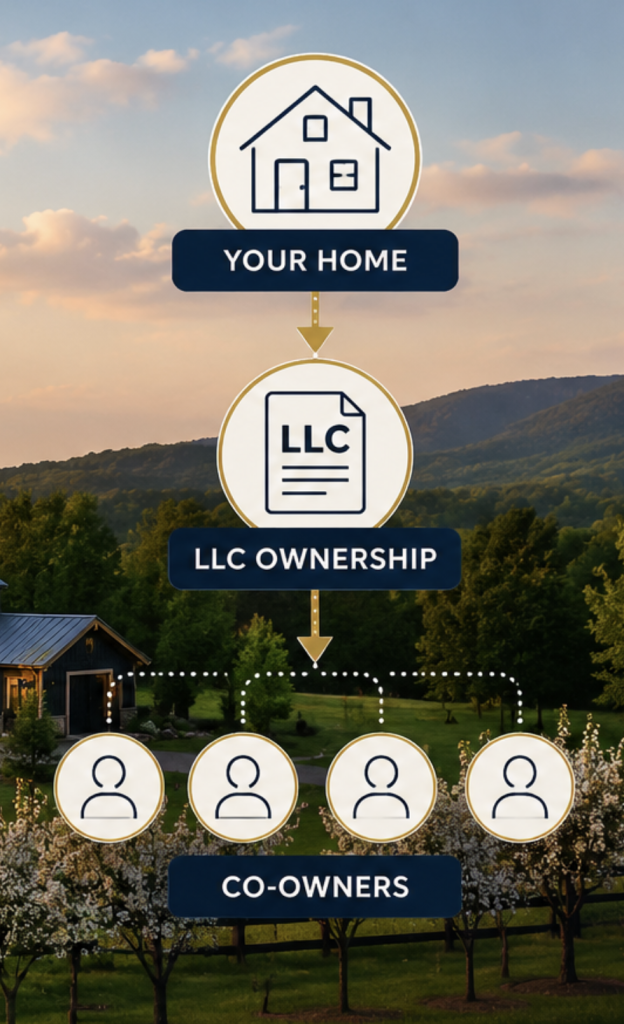
Want to Bring in Co-Owners?
How to Move Your Home Into an LLC for Fractional Ownership
Many homeowners are interested in fractional ownership or co-ownership but get stuck on one practical question:
How do I bring in co-owners without selling my entire home?
In many cases, the answer is to create a limited liability company, commonly called an LLC, and transfer the property into that LLC. Then, instead of each co-owner being added directly to the deed, each person owns a membership interest in the LLC.
This can create a cleaner structure for shared ownership, usage rights, expenses, decision-making, and future resale.
Here is the basic step-by-step process.
The Reality of Owning a Second Home in Tulum
Before changing title, the owner should first determine whether the property is a good fit for fractional ownership.
Key questions include:
- What is the property realistically worth?
- How many weeks per year does the current owner want to retain?
- How many co-owners would be ideal?
- What ownership percentage or share size makes sense?
- Are there existing mortgages, liens, or restrictions?
- Will the property be used only by owners, or also rented?
This step matters because the legal structure should follow the business plan, not the other way around.
Step 2: Form a New LLC
Once the ownership structure is clear, the owner’s attorney can form a new LLC.
For example, if a property is going to be shared by several owners, the LLC might be named something like:
Mountain View Farm LLC
or
Beach House Co-Ownership LLC
The LLC becomes the ownership vehicle for the property.
Step 4: Create the Operating Agreement
The operating agreement is one of the most important documents in a fractional ownership
structure.
It should address:
- Ownership percentages
- Usage rights
- Annual scheduling
- Expense sharing
- Maintenance obligations
- Reserve funds
- Manager authority
- Guest rules
- Rental rules, if allowed
- Pets
- Improvements
- Dispute resolution
- Buy-sell rights
- Exit provisions
This is where co-ownership becomes organized instead of casual.
Step 5: Bring in the New Co-Owner
Once the LLC owns the property, a new co-owner can purchase a membership interest in the LLC.
For example:
- The property is valued at $1,000,000
- The LLC is divided into four equal ownership shares
- Each 25% share is valued at $250,000
- The original owner keeps 75%
- The new co-owner buys 25%
In that case, the deed does not need to change every time an ownership interest changes. The LLC remains the owner of the property, and the members own interests in the LLC.
Step 6: Confirm Mortgage, Tax, and Title Issues
This is the step homeowners should not skip.
Before transferring a property into an LLC, the owner should consult with a real estate attorney, CPA, title company, and lender if there is a mortgage.
Important issues may include:
- Whether the mortgage has a due-on-sale clause
- Whether lender consent is required
- Whether transfer taxes or recording fees apply
- Whether title insurance remains valid
- Whether property taxes could be reassessed
- How the contribution is treated for tax purposes
- Whether the new buyer’s funds create taxable consequences
The right structure can be very effective, but it needs to be handled properly.
Simple Example
A homeowner owns a $2,800,000 lifestyle property and wants to bring in one fractional partner.
The structure could look like this:
- Property value: $2,800,000
- Ownership structure: four equal shares
- Share value: $700,000
- Seller retains: three shares, or 75%
- New co-owner purchases: one share, or 25%
- Annual usage: approximately 12 weeks
The property is transferred into an LLC, and the new co-owner purchases an LLC membership interest rather than being added directly to the deed.
Why Owners Use an LLC for Fractional Ownership
An LLC can help create a cleaner and more professional co-ownership structure.
Instead of relying on informal promises, the LLC operating agreement can define exactly how the property will be used, managed, maintained, and eventually sold or transferred.
For unique second homes, farm estates, beach homes, mountain retreats, and other lifestyle properties, this structure can allow an owner to retain meaningful use while bringing in aligned co-owners to share the cost and enjoyment of the property.
Final Thought
If you are wondering how to fractionalize your home, how to bring in co-owners, or how to change title on a home for fractional ownership, the first step is not simply filing a deed.
The first step is designing the ownership model.
Once the share structure, pricing, usage rights, and owner goals are clear, the legal documents can be created around that plan.
Luxury Fractional Guide helps homeowners think through the co-ownership structure, share pricing, buyer profile, and practical steps before legal documents are prepared.
Share
Let’s Begin With a Conversation
If you’re considering co‑ownership — or exploring how to fractionalize a home you already love — we’d be honored to help.
There’s no pressure and no obligation. Just clarity, insight, and
thoughtful guidance.