
Menu
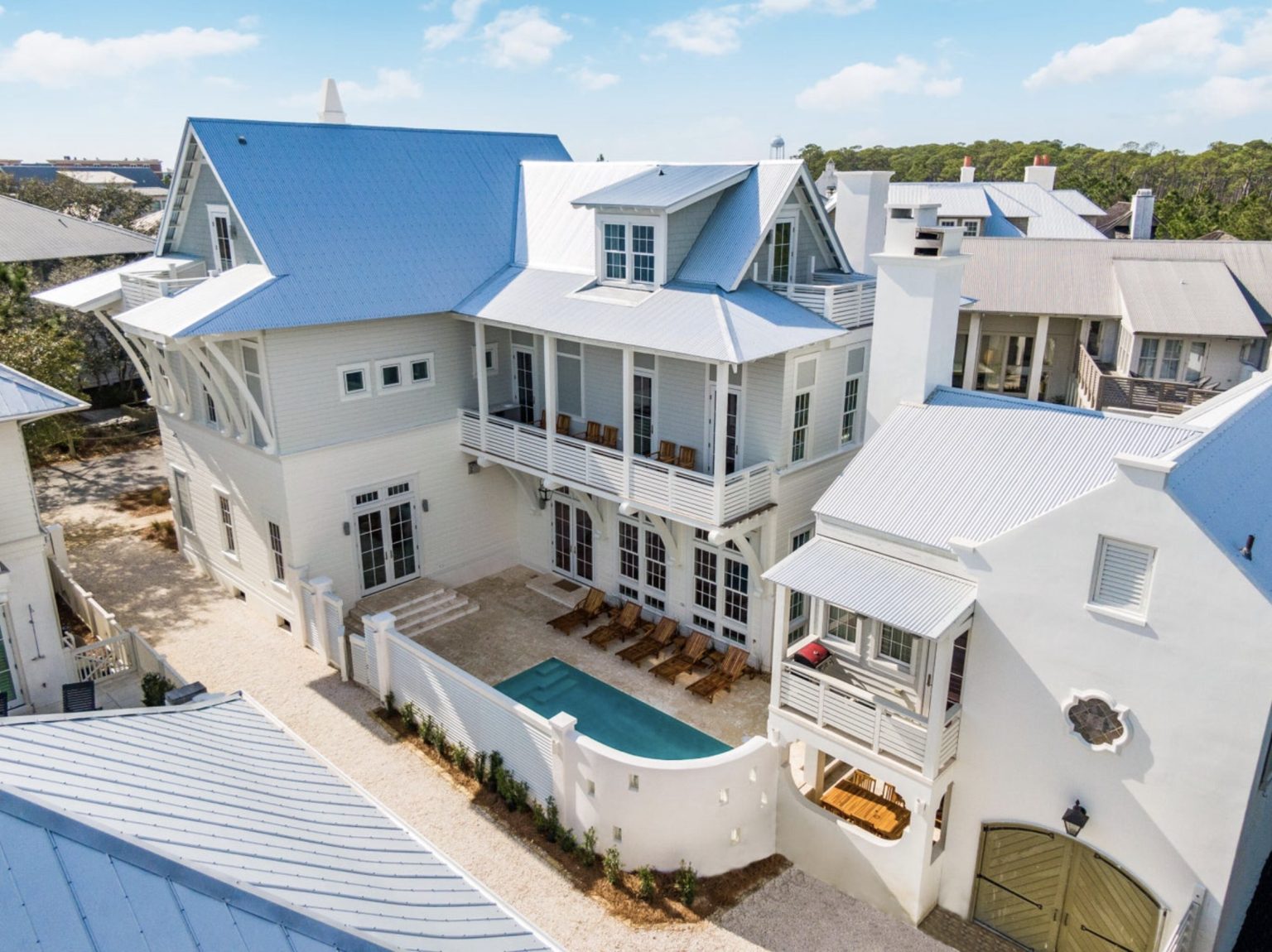
What Do My Annual Fractional Ownership Fees Actually Pay For?
By Karla Jones | Owner, Luxury Fractional Guide
Today’s Question
“What am I actually paying for with my annual fractional ownership fees?”
When you buy fractional ownership in a vacation home, there are generally two different costs:
1) The upfront purchase price. That’s what you pay to acquire your ownership interest. If you’re buying a 1/5th share, for example, you’re purchasing a 20% ownership interest.
2) Your share of the ongoing cost of owning and maintaining the property.
That second cost is what we’re talking about today.
What goes into the upfront purchase price is another important question, especially with developer or sponsor-created fractionals where there may be costs above the pro-rata value of the underlying real estate. I’ll tackle that separately in a future article.
For now, let’s talk about what happens after you own the share.
Why a $250 Monthly Fee May Not Be Cheaper Than a $500 Monthly Fee
When comparing two fractionals, it’s easy to assume the one with the lower annual fees costs less to own.
If one fractional charges $250 a month and another charges $500, the $250 option certainly looks cheaper.
But that doesn’t mean it actually is.
The $250 fee may cover only the property’s basic operating expenses, with very little being set aside for future repairs and replacements. The $500 fee may include a healthy reserve for those expenses.
Eventually, both properties need a new HVAC system, appliances, furniture and repairs. The difference is whether you’ve been gradually setting money aside for them or you’re asked to write a check when they happen.
That’s why I don’t judge a fractional by its monthly fee alone. I want to know what the fee covers, how much is being held in reserve, and how often owners have been asked to contribute additional money.
A lower monthly fee doesn’t necessarily mean a lower cost of ownership. Sometimes it just means more of the property’s future expenses haven’t been funded yet.
I can show you what I mean using a fractional I know particularly well: my own.
Let’s Open the Books on My Florida Co-Ownership
In 2021, five of us came together to purchase a vacation home on Florida’s Gulf coast for $1.125 million.
Rather than talking theoretically about what annual fractional fees should cover, we can look at what it has actually cost us to own the house.
Today, each 1/5th interest contributes $560 per month toward the LLC’s expenses. Our most recent member report calculates the actual monthly cost at approximately $707 per 1/5th owner.
How can we contribute $560 when the estimated cost is $707?
Rental income.
We intentionally make certain peak weeks available for rent, and that income stays in the LLC to help pay the property’s expenses. The home generated approximately $23,561 in LLC rental income in 2022, $19,009 in 2023 and $22,356 in 2024.
That’s an important part of our particular ownership model. Not every fractional rents unused weeks, and buyers shouldn’t assume rental income will offset expenses unless the structure specifically provides for it.
What Does Our $560 Monthly Owner Contribution Actually Pay For?
Each 1/5th owner contributes $560 per month to the LLC through an automatic ACH payment. That money, combined with the rental income the LLC earns from certain weeks, is used to operate and maintain the house.
So what are we actually paying for?
Our 2025 financial statements give us a pretty good picture.
Our 2025 financial statements show homeowners insurance of about $13,557, property taxes of $12,003, home maintenance of about $7,768, utilities of about $4,384, HOA fees of approximately $3,886, professional expenses of about $2,973, plus golf cart insurance and other operating costs.
In other words, we’re paying many of the same bills I would pay if I owned the entire beach house myself.
The difference is that these costs are shared among the owners according to our ownership interests.
Depending on the fractional, annual expenses might also include property management, housekeeping, landscaping, pool maintenance, accounting, furnishings, repairs, utilities, insurance, property taxes, HOA dues and contributions to reserves.
That’s why comparing two fractionals based solely on their annual fees can be misleading. You need to know what’s included.
Self-Managed vs. Professionally Managed
One important distinction in our Florida co-ownership is that we self-manage it.
Our ownership group is responsible for keeping the LLC running, maintaining the financial records and sharing them with the owners, paying bills and making sure the house is properly maintained. Much of that responsibility falls to our managing member, who is also one of the owners.
We don’t pay a professional company to do that work for us.
Many fractionals do. A professional management company may handle the property, owner accounting, reservations, maintenance, housekeeping and much of the administration that comes with sharing a vacation home. That service can add significantly to the annual cost, but it can also be well worth paying for.
In my experience, friends or family who come together to buy a home are often comfortable self-managing. When unrelated owners are brought together through a professionally sponsored co-ownership, having someone responsible for managing both the home and the ownership itself can be particularly valuable.
So when comparing annual fees, I’d ask one more question:
Who is managing the ownership, and what does the management fee actually cover?
The Expense Buyers Tend to Forget
There’s another category that doesn’t fit neatly into this year’s electric bill or property tax payment.
The stuff that hasn’t broken yet.
A vacation home eventually needs a new refrigerator. Furniture wears out. An HVAC system needs work. A television dies. The grill needs replacing.
And sometimes the expense is considerably bigger.
That’s why I believe a well-run fractional needs to think about reserves, not just this year’s operating budget.
At the end of 2025, our LLC had approximately $24,432 in cash and no debt. That cash serves as our reserve for future needs.
We’ve used reserves for things like a new refrigerator, grill, television and living-room furniture rather than asking owners to reach into their pockets every time something needs replacing.
But reserves don’t make unexpected expenses disappear.
Yes, We’ve Had to Put in Extra Money
Over the years, we’ve occasionally had expenses large enough that the owners contributed additional money.
We’ve bought a new golf cart. We’ve dealt with flooring damage after a water leak. We’ve made improvements to the HVAC system.
Our additional contributions have been relatively modest, generally no more than about $2,000 per owner.
I don’t view the existence of an occasional additional contribution as evidence that a fractional is poorly managed.
Houses are unpredictable.
The more important question is whether those requests are occasional responses to unusual expenses or whether they’re happening repeatedly because the ownership deliberately keeps its annual contributions too low.
There’s a big difference.
Our Insurance Bill Is a Good Example
Florida gave our ownership a real-world lesson in why budgets have to change.
In 2022, our existing insurance carrier went out of business. Our homeowners insurance went from approximately $6,368 per year to $9,832 with the replacement carrier.
By 2025, our homeowners insurance expense was approximately $13,557.
No reserve or budget can predict every future insurance increase.
But pretending those increases aren’t coming doesn’t make the ownership less expensive. It simply postpones the bill.
That’s why I’m skeptical when I see a fractional promote unusually low annual fees as a major selling point.
Low fees aren’t necessarily evidence of efficient management. Sometimes they’re evidence of an underfunded budget.
You have to look underneath the number.
Operating Expenses and Reserves Aren’t the Same Thing
This is one distinction every fractional buyer should understand.
The operating budget pays the bills associated with running the property now: insurance, taxes, utilities, HOA dues, management, maintenance and similar expenses.
A reserve is money retained for future repairs, replacements and unexpected expenses.
Then there’s the special assessment or additional capital contribution, which may be needed when an expense exceeds what’s available in the normal operating budget and reserves.
A good financial structure doesn’t guarantee you’ll never receive an assessment.
I’d be suspicious of anyone who promised that.
The goal is to create a realistic operating budget and sensible reserves so owners aren’t constantly being surprised by bills that should have been anticipated.
The Number I Care About More Than the Monthly Fee
If I were evaluating a fractional today, I wouldn’t simply ask:
“What are the annual fees?”
I’d ask what those fees actually cover. I’d want to see the current operating budget, understand what’s included and excluded, know how much cash is being held in reserve, and ask whether owners have had additional assessments or capital calls.
For an established fractional, I’d go one step further.
I’d ask to see both the Profit & Loss statement and the Balance Sheet.
They tell you different things.
The Profit & Loss statement shows the income and expenses associated with operating the property over a period of time. That’s important, but it doesn’t give you the complete financial picture.
The Balance Sheet shows what the ownership has and what it owes at a particular point in time. That includes cash and reserves, but it can also reveal something equally important: debt and other liabilities associated with the property.
A fractional can have a perfectly reasonable operating budget and still have liabilities that aren’t obvious from looking at the annual expenses alone.
That’s why I believe owners should receive and understand both statements. I don’t just want to know what it costs to operate the property. I want to understand the financial condition of the ownership itself.
Don’t Shop for the Lowest Fee
The goal isn’t to find the fractional with the lowest annual fees. It’s to determine whether the costs are reasonable for the property and managed transparently.
A large oceanfront home with a pool and full-service management will naturally cost more to operate than a smaller condo. A resort fractional may have a completely different expense structure from a five-owner private home.
Neither is necessarily better.
That’s why the annual fee alone tells me very little.
Show me the budget. Show me what’s included. Show me the reserves. And show me how the ownership handles unexpected expenses.
Then we can decide whether the annual cost is reasonable.
If you’re considering a fractional and aren’t sure whether the annual fees make sense, send me the property and the numbers. I’m happy to help you think through what you’re actually paying for.
Share
Let’s Begin With a Conversation
If you’re considering co‑ownership — or exploring how to fractionalize a home you already love — we’d be honored to help.
There’s no pressure and no obligation. Just clarity, insight, and
thoughtful guidance.